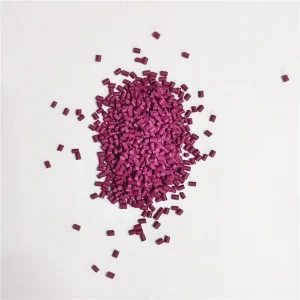
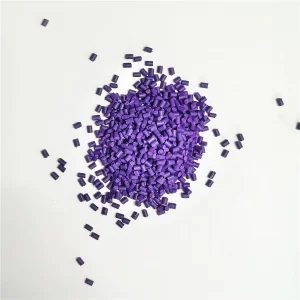
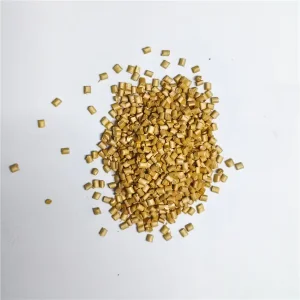
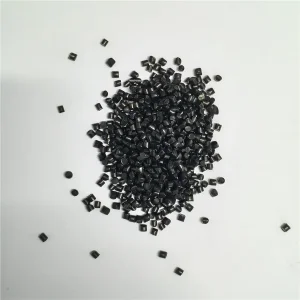
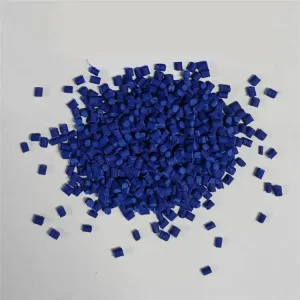
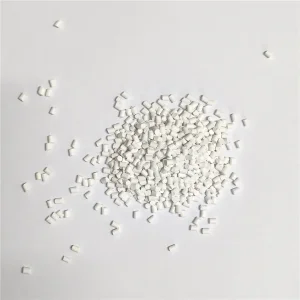
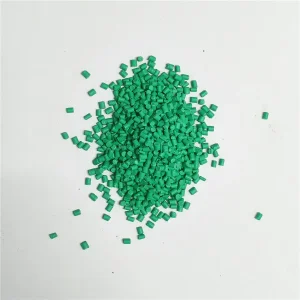
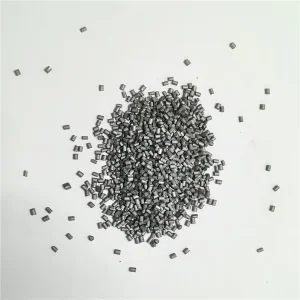
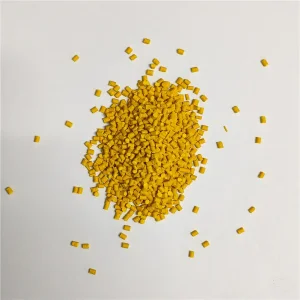
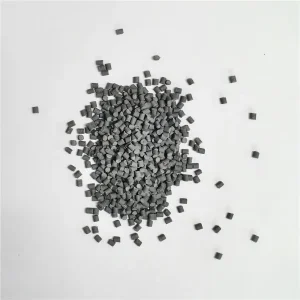
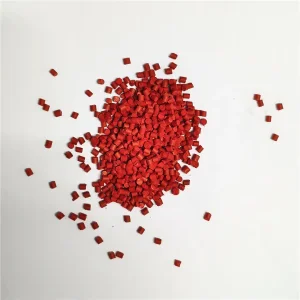
Explore our flagship Polyethylene (PE) masterbatches engineered specifically for blow molding, injection molding, and continuous extrusion applications requiring superior opacity and heat resistance.
In modern commercial horticulture, landscaping, and retail gardening supply chains, Polyethylene (PE) plastic flower pots, planters, and nursery containers represent a multi-billion-dollar global market segment. Unlike standard indoor plastic products, horticultural containers face brutal environmental exposures: intensive photo-oxidative UV radiation, cyclical thermal expansion and contraction, mechanical stress during root growth and transit, and exposure to aggressive agrochemicals.
Achieving longevity, aesthetic vibrancy, structural integrity, and manufacturing cost-efficiency in plastic flower pot production depends fundamentally on selecting premium masterbatch formulations. A high-performance PE Plastic Flower Pot Masterbatch is not merely a coloring agent—it is a sophisticated chemical delivery system containing high-purity micro-dispersed pigments, tailored carrier resins (LDPE/LLDPE/HDPE), UV stabilizers (HALS), thermal antioxidants, and processing aids designed to withstand injection molding temperatures reaching 260°C without thermal degradation.
Global plastic container manufacturers, injection molders, and agricultural supply brand owners increasingly rely on specialized Chinese masterbatch producers like Changzhou Jiazhou Plastic Products Co., Ltd. (operating with 16+ years of manufacturing experience). China’s dominance in industrial color concentrate manufacturing stems from distinct structural, technological, and logistical advantages:
China maintains the world's most comprehensive petrochemical chemical ecosystem. Factories in Jiangsu and regional polymer hubs enjoy direct access to high-purity carbon black grades (specialty furnace blacks), premium grade Anatase and Rutile Titanium Dioxide ($TiO_2$), and virgin carrier polyethylenes. This localized supply integration eliminates raw material lead time delays and insulates global buyers from volatile price fluctuations.
With high-capacity, multi-extrusion line facilities running continuous twin-screw compounding extruders, Chinese factories deliver unmatched economies of scale. High-concentration PE flower pot masterbatches—offering pigment loadings of up to 40% to 50%—allow global injection molders to achieve full color opacity at remarkably low let-down ratios (LDRs between 1.0% and 3.0%), significantly lowering unit production costs.
Leading manufacturers utilize advanced Datacolor spectrophotometers and automated color-matching software. Whether matching standard Pantone, RAL shade references, or custom brand-specific hues (such as terracotta, hunter green, rose red, charcoal grey, or metallic silver), Chinese masterbatch labs achieve tight color tolerances ($\Delta E < 0.5$) tailored to specific melt indices.
The plastic container industry is undergoing rapid technical transformation driven by environmental legislation, circular economy mandates, and changing consumer preferences. Manufacturers must align masterbatch formulations with the following key macro trends:
Governments worldwide are enforcing minimum recycled resin requirements in agricultural plastics. However, PCR resins often contain background discoloration, batch variation, and residual impurities. High-opacity white, grey, and black masterbatches are engineered specifically to mask PCR yellowing, equalize resin color variances, and maintain structural strength.
Commercial nurseries require plastic planters that survive 3 to 10 years of outdoor exposure without chalking, fading, or embrittlement. Modern PE flower pot masterbatches incorporate synergetic combinations of Hindered Amine Light Stabilizers (HALS) and UV absorbers (e.g., Benzotriazoles) that neutralize free radicals generated by solar UV-A and UV-B spectrums.
Environmental standards prohibit lead chromates, cadmium, and diarylide yellow pigments in horticultural products that touch soil, water runoff, or edible plants. Leading China masterbatch suppliers utilize organic, high-performance pigments compliant with EU Directive RoHS 2011/65/EU and REACH Annex XVII, guaranteeing safety for organic gardening applications.
PE masterbatch formulations must be carefully calibrated according to the end-use plastic processing technology and structural requirements of different planter types:
| Application Scenario | Primary Resin | Processing Method | Key Technical Requirement | Recommended Masterbatch Type |
|---|---|---|---|---|
| Heavy-Duty Landscape Planters | HDPE / Recycled HDPE | Injection Molding | High impact strength, zero warping, 260°C heat tolerance | High-Concentration PE Black / Dark Grey Masterbatch |
| Thermoformed Commercial Nursery Pots | LLDPE / LDPE blends | Sheet Extrusion & Thermoforming | Thin-wall flexibility, high light opacity, rapid cycle time | Anti-fading PE White / Carbon Black Masterbatch |
| Decorative Consumer Garden Containers | HDPE / PP | Injection Molding / Blow Molding | Vibrant cosmetic colors (Gold, Rose Red, Blue, Silver), high gloss | Specialty PE Color Masterbatch (Delta E < 0.5) |
| Rotomolded Architectural Planters | LLDPE Powder | Rotational Molding | Long heating cycles, uniform wall distribution, zero pinholes | High-Dispersion Micro-Pellet PE Masterbatch |
| Multi-Layer Co-extruded Grow Containers | LDPE / LLDPE | Blown Film / Co-Extrusion | Black inner root barrier / White exterior thermal reflection layer | Co-Ex Black & White PE Masterbatch Pair |
Substandard masterbatches cause costly manufacturing defects and high scrap rates. Precision-formulated PE masterbatches directly eliminate industrial failure modes:
Poorly dispersed pigment agglomerates cause uncolored specks, filter mesh clogging during extrusion, and localized stress concentrators that lead to premature planter cracking.
✓ Solution: Twin-screw continuous compounding guarantees particle dispersion below 5 microns, maximizing filtration efficiency and structural toughness.
Certain organic pigments (such as Phthalocyanine Blue/Green or azo reds) induce nucleation during HDPE crystallization, leading to non-uniform shrinkage and warped container rims.
✓ Solution: Non-nucleating pigment formulations specifically designed for injection molding maintain dimensional stability and perfect rim stacking.
Low-grade additives can migrate to the surface of the flower pot, creating greasy films, chalky residues, or dye transfer when touched by agricultural workers or consumers.
✓ Solution: Polymer-bound additives and non-migratory organic pigments ensure clean, permanent surface color integration even under humid greenhousing.
When evaluating PE flower pot masterbatch suppliers, procurement directors and polymer engineers should enforce a comprehensive quality assurance verification checklist:
The Melt Flow Rate of the masterbatch carrier resin must closely match or slightly exceed the MFI of the base polymer (e.g., MFI 4 to 20 g/10min for injection molding) to ensure thorough homogeneous mixing without phase separation.
For black horticultural pots, masterbatch formulated with furnace carbon black (particle size 20–30 nm) provides optimal UV screening and jetness at lower addition rates (typically 2% to 4% LDR).
Automated quality control standards demand strict spectral matching ($CIE L^*a^*b^*$ parameters) to prevent noticeable shade shifts across different production lots delivered to global clients.
Get detailed technical insights into selecting and applying Polyethylene masterbatch for plastic container manufacturing.
Select from our comprehensive portfolio of high-concentration color and additive concentrates engineered for industrial plastic manufacturing.