Industrial Whitepaper & Procurement Intelligence

High-Quality Yellow PE Masterbatch Company & Technical Engineering Guide

An authoritative whitepaper on polyolefin masterbatch formulation, pigment dispersion dynamics, global regulatory compliance (FDA/REACH), and supply chain optimization for international plastic converters.

Product Catalog

Top-Tier Color & Performance Masterbatches

Engineered for precision blown film, high-speed injection molding, and complex profile extrusion. Explore our core technical formulations below.
China High Concentration PE Yellow Masterbatch Non-toxic Anti-migration

China High Concentration PE Yellow Masterbatch Non-toxic Anti-migration

View Details & Specs
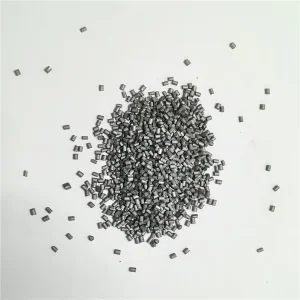
Custom High Concentration PE Silver Masterbatch Anti-fading High Weather Resistance

Custom High Concentration PE Silver Masterbatch Anti-fading High Weather Resistance

View Details & Specs
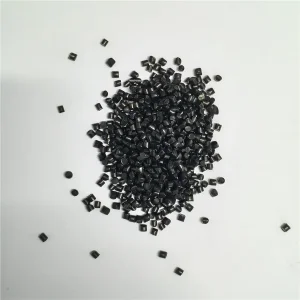
Cheap High Concentration PE Black Masterbatch Eco-friendly 260°C Heat Resistant

Cheap High Concentration PE Black Masterbatch Eco-friendly 260°C Heat Resistant

View Details & Specs
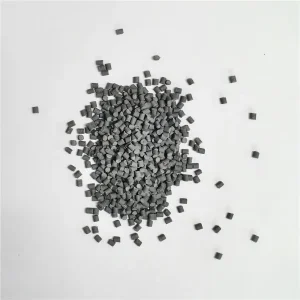
China High Concentration PE Grey Masterbatch Non-migration Heat Resistant

China High Concentration PE Grey Masterbatch Non-migration Heat Resistant

View Details & Specs
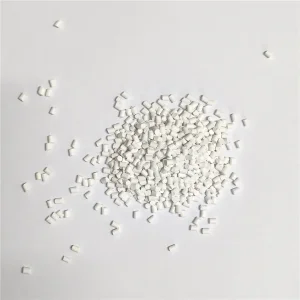
China High Concentration PE White Masterbatch Non-toxic Weather Resistant

China High Concentration PE White Masterbatch Non-toxic Weather Resistant

View Details & Specs
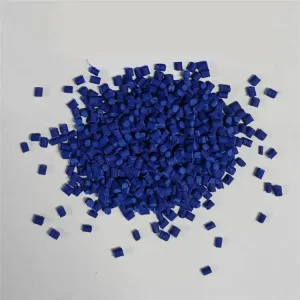
High-Quality High Concentration Blue Masterbatch PE Carrier

High-Quality High Concentration Blue Masterbatch PE Carrier for Plastic Injection

View Details & Specs
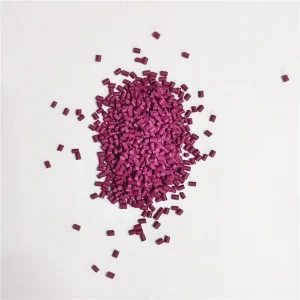
Cheap High Concentration PE Rose Red Masterbatch Anti-fading Heat Resistant

Cheap High Concentration PE Rose Red Masterbatch Anti-fading Heat Resistant

View Details & Specs
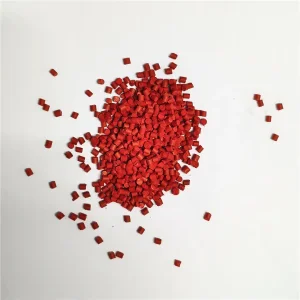
Cheap High Concentration PE Red Masterbatch Bright Color 260°C Heat Resistant

Cheap High Concentration PE Red Masterbatch Bright Color 260°C Heat Resistant

View Details & Specs

1. Executive Overview & Polymer Coloration Fundamentals

In the modern polymer processing domain, evaluating a high-quality yellow PE masterbatch company demands a comprehensive understanding of raw material physics, pigment chemistry, and dispersion thermodynamics. Polyethylene (PE)—spanning Low-Density Polyethylene (LDPE), Linear Low-Density Polyethylene (LLDPE), and High-Density Polyethylene (HDPE)—presents distinct crystallization rates and rheological behaviors during extrusion and injection molding.

Polymer Carrier Matrix Synergy

A superior yellow PE masterbatch utilizes a virgin polyethylene carrier with a melt flow index (MFI) meticulously calibrated to be slightly higher than the target base resin. This guarantees optimal interfacial shear during melt blending, preventing micro-agglomeration, surface pinholes, and color streakiness in ultra-thin blown films.

Organic vs. Inorganic Chromophore Physics

Choosing between organic yellow pigments (such as Isoindoline Yellow PY139 or Benzimidazolone Yellow PY180) and high-performance inorganic yellows depends on process temperature and opacity targets. High-end masterbatch companies engineer hybrid formulations to deliver maximal color strength (chroma) alongside extreme thermal stability up to 300°C.

"Information Gain Insight: True color stability in yellow masterbatches is achieved not merely by pigment concentration, but through multi-stage twin-screw melt homogenization, complete wetting of pigment crystallites, and the addition of secondary antioxidant synergistic packages (Phosphites + Hindered Phenols)."

2. Technical Specifications & Material Engineering Benchmarks

Global procurement departments require verifiable quantitative benchmarks rather than subjective color marketing. Below is the standardized technical specification matrix for tier-1 high-concentration yellow PE masterbatch products.

Performance Indicator Testing Standard Premium Grade Spec Standard Packaging Grade
Pigment Content (%) ISO 3451-1 / TGA 35% - 50% High-Loading 20% - 30% Standard
Melt Flow Index (MFI) ASTM D1238 (190°C / 2.16kg) 12 - 25 g/10min (Tailored) 5 - 10 g/10min
Heat Resistance (°C) DIN EN 12877-2 260°C - 300°C (Dwell Time 5 min) 220°C - 240°C
Light Fastness (Blue Wool) ISO 105-B02 Grade 7 - 8 (Extreme UV Stable) Grade 5 - 6
Weather Resistance ISO 4892-2 (Xenon Arc) ΔE < 1.5 after 2000 hrs ΔE < 3.0 after 500 hrs
Filter Pressure Value (FPV) EN 13900-5 (14 µm mesh) < 0.8 bar/g (Ultra-clean) < 2.5 bar/g
Heavy Metal Compliance ICP-OES / RoHS 3.0 Cd, Pb, Hg, Cr(VI) < 5 ppm RoHS Compliant (< 100 ppm)
ΔE < 0.5
Batch-to-Batch Color Consistency
300°C
Max Thermal Degradation Resistance
100%
Non-Heavy Metal & Cadmium Free
< 0.8 bar/g
Ultra-Low Filter Pressure Value

3. Addressing Global Enterprise Procurement Criteria & Pain Points

Global enterprise plastic converters—operating across North America, Europe, Southeast Asia, and the Middle East—face rigorous manufacturing environments. Sourcing from a verified yellow PE masterbatch manufacturer requires resolving four core operational vulnerabilities.

Elimination of Pigment Migration & Plate-Out

Low-grade yellow masterbatches often suffer from organic pigment solubility in hot polyethylene, causing migration (blooming) onto packaging surfaces or severe plate-out on extruder screws and cooling rolls. Premium manufacturers utilize high-molecular-weight polymeric dispersants that anchor chromophores permanently within the PE matrix.

Food Contact & Regulatory Compliance

For yellow masterbatch applied in FMCG packaging, beverage caps, and dairy bottles, total compliance with US FDA 21 CFR 178.3297, EU Regulation 10/2011, and GB 9685 is mandatory. Top suppliers provide full raw material traceability and migration test certificates for global customs clearance.

Processing Efficiency & Dosage Optimization

By increasing pigment concentration up to 50% while maintaining fluid rheology, converters can reduce masterbatch dosing (let-down ratio) from 4% down to 1%–2%. This dramatically cuts freight costs, inventory footprint, and overall cost-per-ton of finished plastic goods.

4. China Factory Supply Chain Advantages & Manufacturing Competence

China’s masterbatch manufacturing sector has undergone a massive transformation from labor-intensive compounding to high-precision digital automated production. Partnering with a Changzhou-based leading masterbatch manufacturer delivers immense strategic supply chain benefits.

1. Upstream Petrochemical & Pigment Integration

Located in Jiangsu Province—China’s premier chemical innovation cluster—factories enjoy direct proximity to world-class PE resin producers (Sinopec, PetroChina) and organic pigment chemical plants. This localized supply chain ecosystem shields international buyers from global raw material price shocks and ensures uninterrupted production schedules.

2. Advanced Twin-Screw Extrusion & Underwater Pelletizing

Modern Changzhou facilities utilize co-rotating twin-screw extruders equipped with gravimetric loss-in-weight feeders and underwater micro-pelletizing systems. This guarantees uniform masterbatch pellet geometry (2.5mm spherical granules), eliminating dust formation and ensuring smooth volumetric dosing in automatic gravimetric blenders.

3. Rapid Custom Shade Matching & Lab Technology

Equipped with Datacolor spectrophotometers and computer color matching (CCM) software, engineering labs can match custom Pantone or RAL yellow shades within 48 hours. Express lab-sample dispatch ensures rapid product development cycles for international clients.

4. Scalable Export Logistics & Rapid Lead Times

Proximity to Shanghai and Ningbo deep-water ports enables seamless containerized shipments. Standard orders achieve a reliable 15-day manufacturing lead time, backed by complete export documentation including SDS, TDS, Certificate of Analysis (COA), and REACH pre-registration paperwork.

5. Localized Application Scenarios & Processing Engineering Field Guide

Yellow PE masterbatch performance requirements vary significantly across different converting technologies. Below is an engineering breakdown across major industrial application fields.

BLOWN FILM

Agricultural & Packaging Film

Requires zero agglomerates to prevent film bubble breakage during high-speed blowing. Masterbatch must feature high dispersion (FPV < 0.8) and long-term UV resistance for greenhouse covers and banana protection bags.

INJECTION MOLDING

Crates, Caps & Industrial Parts

Demands high thermal stability (up to 280°C) to withstand fast injection cycle times without color drift or thermal degradation. Must maintain high impact resistance and zero warpage in large molded containers.

BLOW MOLDING

Hollow Containers & Bottles

Requires excellent wall thickness color uniformity, chemical resistance against detergent surfactant stress cracking, and non-migration properties for food contact squeeze bottles.

EXTRUSION

PE Pipes & Warning Tapes

Used in gas/water pipe color-coding and subterranean warning tapes. Demands extreme outdoor lightfastness (Grade 8) and resistance to chemical leaching in soil environments.

6. Regulatory Compliance & Environmental Sustainability Framework

As global environmental directives become stricter, polymer color suppliers must align with circular economy standards and toxicological safety profiles.

Elimination of Heavy Metals

Historical yellow masterbatches relied heavily on Lead Chromate (PY34) and Cadmium Yellow (PY35). Modern high-quality suppliers have completely phased out toxic inorganic pigments, replacing them with high-chroma, non-toxic organic complexes compliant with RoHS 3.0 and EN 71-3 (Toy Safety).

REACH SVHC & Halogen-Free Mandates

Formulations are continuously audited to guarantee absence of Substances of Very High Concern (SVHC) as listed by the European Chemicals Agency (ECHA). Halogen-free variants are available for electronic packaging applications.

Recycled PE Carrier Integration (PCR/PIR)

To support global carbon neutrality goals, forward-thinking manufacturers offer yellow masterbatches formulated with certified Post-Consumer Recycled (PCR) or Post-Industrial Recycled (PIR) PE carriers without compromising color vibrancy.

7. Future Industry Trends: Smart & Functional Masterbatch Technologies

The masterbatch industry is evolving beyond aesthetic coloration toward functional multi-attribute additive masterbatches.

NIR-Reflective Cool Yellow Masterbatch

Innovative Near-Infrared (NIR) reflective yellow pigments reflect solar heat rather than absorbing it. Applied in outdoor plastic stadium seats, agricultural films, and building panels, this technology reduces surface temperatures by 10°C–15°C, preventing thermal degradation and warping.

Combo Masterbatches (Color + Additive Synergy)

Combining yellow pigments with anti-static agents, UV stabilizers (HALS), and processing aids (PPA) into a single masterbatch pellet eliminates multi-component dosing errors at the converter's factory, streamlining production management.

Full Product Range

Industrial Grade PE Color Masterbatch Series

Explore our full line of specialized color and functional masterbatches designed to meet diverse global processing requirements.
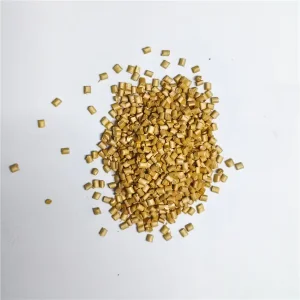
Cheap High Concentration PE Gold Masterbatch Anti-fading Heat Resistant

Cheap High Concentration PE Gold Masterbatch Anti-fading Heat Resistant

View Details & Specs
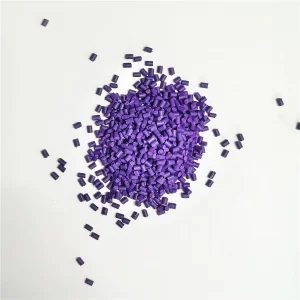
Cheap High Concentration PE Purple Masterbatch Anti-fading Stable Color

Cheap High Concentration PE Purple Masterbatch Anti-fading Stable Color

View Details & Specs
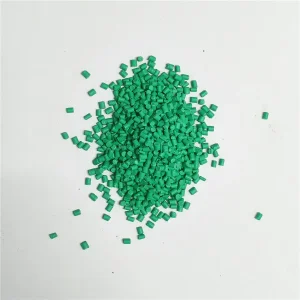
High-Quality High Concentration PE Green Masterbatch Anti-fading Heat Resistant

High-Quality High Concentration PE Green Masterbatch Anti-fading Heat Resistant

View Details & Specs
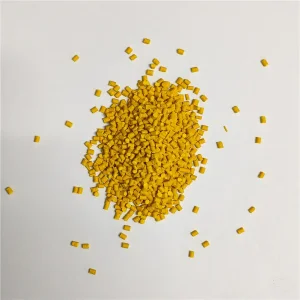
China High Concentration PE Yellow Masterbatch Non-toxic Anti-migration

China High Concentration PE Yellow Masterbatch Non-toxic Anti-migration

View Details & Specs
China High Concentration PE White Masterbatch Non-toxic Weather Resistant

China High Concentration PE White Masterbatch Non-toxic Weather Resistant

View Details & Specs
Cheap High Concentration PE Black Masterbatch Eco-friendly 260°C Heat Resistant

Cheap High Concentration PE Black Masterbatch Eco-friendly 260°C Heat Resistant

View Details & Specs
High-Quality High Concentration Blue Masterbatch PE Carrier

High-Quality High Concentration Blue Masterbatch PE Carrier for Plastic Injection

View Details & Specs
Custom High Concentration PE Silver Masterbatch Anti-fading High Weather Resistance

Custom High Concentration PE Silver Masterbatch Anti-fading High Weather Resistance

View Details & Specs

8. Technical & Procurement FAQ (Frequently Asked Questions)

Expert responses to critical engineering and purchasing inquiries regarding yellow PE masterbatches.

Q1: How does a yellow PE masterbatch affect the Melt Flow Index (MFI) of the final plastic product?
The impact on MFI depends on the masterbatch carrier resin and pigment loading. A professionally formulated yellow PE masterbatch uses a virgin PE carrier with a slightly higher MFI than the base polymer. At typical dosing rates (1% to 3%), the masterbatch integrates seamlessly without altering the melt viscosity, ensuring consistent cycle times in injection molding and stable bubble inflation in blown film extrusion.
Q2: What prevents organic yellow pigments from fading under outdoor UV exposure?
Organic yellow pigments are vulnerable to photo-oxidative degradation caused by UV radiation. High-quality masterbatch manufacturers incorporate light stabilizers—specifically Hindered Amine Light Stabilizers (HALS) and UV absorbers (Benzotriazoles)—directly into the masterbatch formulation. This synergistic combination neutralizes free radicals, ensuring outdoor lightfastness ratings of Grade 7–8 on the Blue Wool Scale.
Q3: Can PE yellow masterbatch be used for PP (Polypropylene) extrusion or injection molding?
While PE masterbatch can physically disperse in PP due to polymer polyolefin compatibility, it is generally recommended to match the carrier resin to the matrix polymer (i.e., PP carrier for PP resin). Using PE carrier masterbatch in PP at low let-down ratios (< 2%) is acceptable for non-structural parts, but high let-down ratios may slightly reduce the heat deflection temperature (HDT) and clarity of PP products.
Q4: What causes screen pack clogging during blown film extrusion, and how is it resolved?
Screen pack clogging is caused by un-dispersed pigment agglomerates or high inorganic filler impurities. This is measured via Filter Pressure Value (FPV). High-quality yellow PE masterbatches maintain an FPV < 0.8 bar/g by utilizing triple-pass twin-screw compounding and high-mesh melt filtration (up to 14 microns), preventing premature pressure build-up and screen changes.
Q5: How can global procurement officers verify batch-to-batch color consistency before shipping?
Tier-1 manufacturers provide a comprehensive Certificate of Analysis (COA) for every production lot. This includes spectrophotometric Delta E (ΔE) data measured under D65 lighting conditions (standard ΔE < 0.5), MFI test records, and heat stability verification at 260°C. Retention samples from every batch are stored for 24 months for audit traceability.
Q6: What is the shelf life and proper storage condition for high-concentration PE yellow masterbatch?
When stored in original sealed moisture-barrier bags in a cool, dry warehouse away from direct sunlight, PE masterbatches have an official shelf life of 24 months. If bags are opened or exposed to ambient humidity for extended periods, pre-drying at 70°C–80°C for 2 hours prior to extrusion is recommended to prevent moisture-induced surface splay.