Engineered for rigorous melt-index stability, ultra-high pigment dispersion, and RoHS/REACH compliance across plastics injection molding and film extrusion lines.
An in-depth whitepaper examining how Greater Boston's advanced manufacturing hubs leverage top-tier Chinese manufacturing clusters for pigment technology and cost optimization.
The industrial architecture of Greater Boston, Massachusetts—stretching from the innovation corridors of Route 128 and Route 495 to Cambridge's life sciences hubs—demands unprecedented chemical precision, process stability, and cost-efficiency in polymer processing. As local enterprises scale operations across medical device housing, micro-fluidic diagnostics, specialized cold-chain packaging, and high-durability commercial consumables, sourcing strategy has become a central lever for market competitiveness.
China's polymer chemical manufacturing base, centered in high-tech industrial belts like Jiangsu and Zhejiang, has evolved from high-volume standardized output into specialized, custom-formulated compounding. Today, procurement directors, plastics engineers, and supply chain executives in Boston actively look to China for high-concentration polyethylene (PE), polypropylene (PP), and functional filler masterbatches that satisfy stringent regulatory frameworks (FDA, RoHS, REACH) while delivering superior economic returns.
Deconstructing the unique demand drivers, regulatory pressures, and technical requirements of New England's premier economic region.
Greater Boston is the undisputed global nexus for biotechnology and medical technology. Precision molding firms producing diagnostic cassettes, syringe plungers, and sterile tray films require masterbatches with non-migratory pigments, zero heavy metal residue, and perfect batch-to-batch color consistency.
With Boston serving as a key export hub for biologics and specialty foods, local blown-film converters require specialized PE masterbatches. These formulations must provide UV blocking, opacity against light degradation, and structural puncture resistance under sub-zero temperatures.
Massachusetts enforces aggressive environmental compliance standards. Local plastic processors are tasked with incorporating post-consumer recycled (PCR) resins without sacrificing tensile strength or visual appeal, driving massive demand for ultra-opaque black and functional filler masterbatches.
Domestic North American masterbatch suppliers often struggle with rigid MOQs, prolonged lead times for custom color matches (often 6-8 weeks), and premium pricing structures that squeeze margins for middle-market molding facilities across Massachusetts, Rhode Island, and New Hampshire. Sourcing direct from vetted Chinese manufacturers offers a flexible, high-capacity alternative.
How the global transition toward high-concentration solid masterbatches is redefining polymer manufacturing economics worldwide.
The global color masterbatch market, valued at over $11 Billion USD, is experiencing a fundamental structural shift. Processing facilities globally are rapidly transitioning away from liquid colorants and dry powder pigments toward high-concentration solid masterbatches engineered on tailored polymer carriers (PE, PP, PET, PS).
Understanding the technological infrastructure behind Changzhou Jiazhou Plastic Products Co., Ltd. and China's compounding dominance.
China’s competitive dominance in masterbatch manufacturing is built on three core pillars: integrated raw material supply chains, advanced continuous compounding technology, and automated quality verification.
Our Changzhou production facility utilizes co-rotating twin-screw extruders featuring specialized screw elements designed for maximum shear stress, ensuring agglomerate-free pigment deagglomeration down to the sub-micron scale.
Utilizing Datacolor computerized color matching systems, our lab engineers match custom Pantone or Ral color chips with a strict tolerance of $\Delta E < 0.5$, eliminating color shift across multi-ton production runs.
Located in the heart of Jiangsu's petrochemical cluster, direct pipeline access to high-grade titanium dioxide (TiO₂), premium carbon black, and virgin PE carriers enables a raw material cost efficiency that is directly passed to international procurement partners.
Translating chemical capability into real-world manufacturing performance across New England's top industrial sectors.
Challenge: A Waltham, MA medical device molder experienced microscopic pinholes and structural brittleness in injection-molded centrifuge tubes due to poor pigment dispersion from a local supplier.
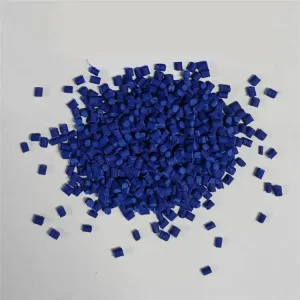
Solution: Implementation of Jiazhou’s High-Concentration PE Blue Masterbatch engineered with a specialized low-MFI carrier. The ultra-dispersed pigment eliminated stress concentration points, boosting impact resistance while maintaining strict non-leachable non-migratory standards.
Challenge: A major Boston-area packaging converter required 100% opacity on high-speed blown film extrusion lines incorporating 50% post-consumer recycled (PCR) resin blends.
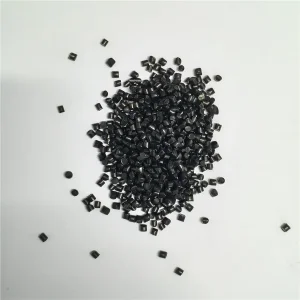
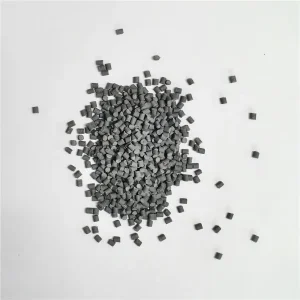
Solution: Application of Jiazhou’s Eco-Friendly 260°C Heat Resistant Black Masterbatch with high carbon black loading. The high tinting strength completely masked resin impurities while preserving film elongation and tear strength.
Challenge: New England weather variations subject outdoor polyethylene film covers to intense UV radiation and temperature fluctuations, causing premature cracking and yellowing.
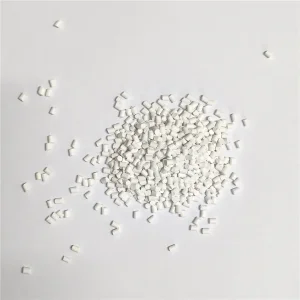
Solution: Deployment of Jiazhou’s Non-Toxic Weather Resistant White Masterbatch containing rutile-grade TiO₂ and embedded Hindered Amine Light Stabilizers (HALS), extending outdoor service life by over 300%.
Challenge: A Cambridge hardware startup required metallic gold and silver aesthetic finishes on injection-molded plastic enclosures without expensive post-mold painting.
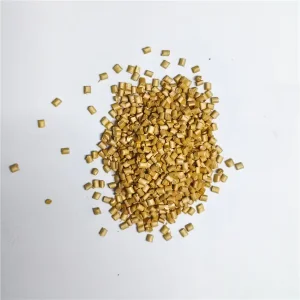
Solution: Customized Anti-Fading PE Gold & Silver Metallic Masterbatches, producing a flawless metallic luster straight from the mold and significantly cutting unit production costs.
Anticipating the technological requirements of tomorrow's sustainable, high-performance polymer products.
Traditional carbon black masterbatches absorb Near-Infrared (NIR) light, preventing automated optical sorting in recycling plants. Next-generation NIR-detectable black masterbatches allow black plastics to be identified and sorted by polymer type, driving the circular economy forward.
With biodegradable polymers (PLA, PBAT, PHA) gaining traction in Massachusetts single-use packaging applications, R&D is focused on masterbatches utilizing compostable carrier resins that leave zero microplastic footprint upon degradation.
Integrating nano-scale additives—such as barrier-enhancing nanoclays, anti-microbial silver ion complexes, and static-dissipative graphene—directly into color masterbatches, transforming standard plastics into smart functional materials.
A structured framework for evaluating, auditing, and establishing long-term masterbatch supply agreements with Chinese manufacturers.
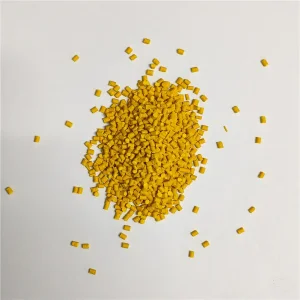
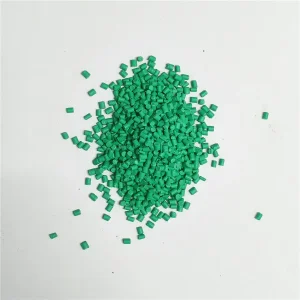
Explore our complete catalog of specialized PE colorants and functional filler masterbatches engineered for injection molding, blown film, and profile extrusion.
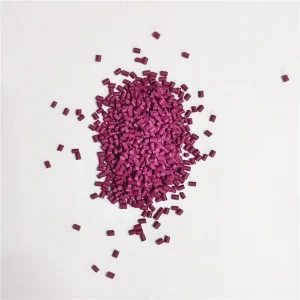
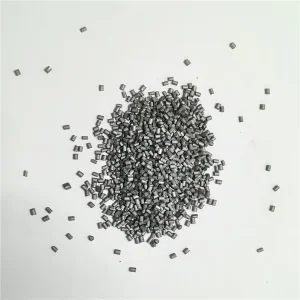
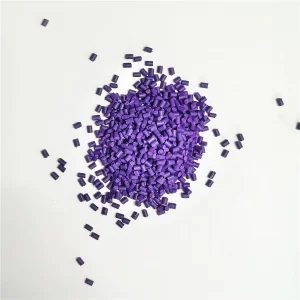
Expert insights on technical specifications, custom matching, compliance, and shipping masterbatches to North America.
Our masterbatches feature pigment loadings up to 40%-70% depending on the color shade. Recommended let-down ratios typically range between 1% to 4% for standard injection molding and blown film extrusion, substantially reducing cost-per-pound compared to lower-concentration alternatives.
We maintain strict digital color matching protocols using Datacolor spectrophotometers. Every batch is evaluated against a master color standard with a maximum acceptable color tolerance of $\Delta E < 0.5$. In addition, melt flow index (MFI) and filter pressure value (FPV) are verified before batch release.
Yes. We supply specialized non-toxic, heavy-metal-free, and low-volatility masterbatches formulated specifically for food contact compliance under FDA 21 CFR and European REACH SVHC regulations. Full compliance documentation is provided with every shipment.
Absolutely. Our R&D color lab provides custom color formulation within 3 to 5 business days upon receiving a Pantone/RAL code or physical plastic sample. Free sample pellets are dispatched via express air courier for customer mold testing.
Standard manufacturing lead time is 15 business days from order confirmation. Sea freight shipments from Shanghai/Ningbo ports directly to the Port of Boston (Conley Terminal) or New York/New Jersey ports take approximately 25 to 35 days door-to-door.
Optimize your plastic manufacturing costs, enhance color consistency, and secure your polymer supply chain today. Connect with our engineering team for technical datasheets and custom quotes.
Send Inquiry Now