Engineered specifically to meet North American resin processing tolerances, FDA compliance standards, and ASTM physical properties.
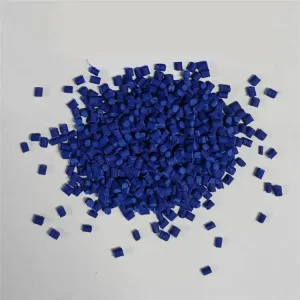
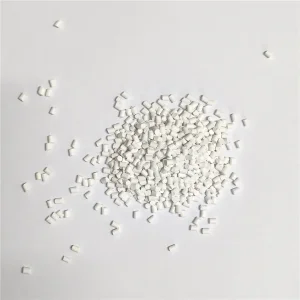
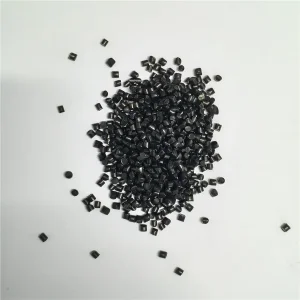
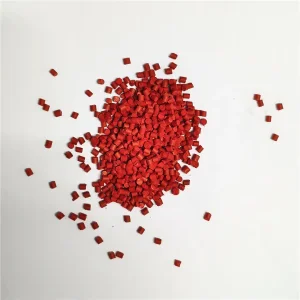
The manufacturing sector in the United States is undergoing a profound transformation. Accelerated by reshoring initiatives, the Inflation Reduction Act (IRA), and rising demand for sustainable packaging solutions, North American plastic converters, compounders, and injection molders are facing unprecedented pressure to optimize cost structures without sacrificing product quality or regulatory compliance.
Across key industrial clusters—from the Midwest automotive corridor (Michigan, Ohio, Indiana) to the Gulf Coast chemical hubs (Texas, Louisiana) and West Coast packaging sectors—procurement teams are actively re-evaluating their raw material supply chains. The demand for high-performance polyethylene (PE) color masterbatch, filler masterbatch, and functional additives has reached an all-time high, driven by rigorous end-use specifications in automotive interior trims, FDA-regulated food packaging, heavy-duty industrial pipe extrusion, and precision agricultural films.
The United States consumes over 8 million metric tons of polyolefin resins annually. Several key macroeconomic trends dictate the material choices of US manufacturing executives today:
Strict adherence to US FDA food contact regulations, heavy metal limits (CONEG), and California Proposition 65 toxicity reporting requirements.
Formulations engineered to improve melt flow index (MFI), reduce processing temperatures, and minimize screw buildup during continuous 24/7 extrusion runs.
Rapid spectrophotometric color matching aligned with Pantone, RAL, and US client-supplied physical master plaques with ΔE < 0.5 tolerances.
The competitive moat of Chinese polymer additive manufacturers is built on decades of supply chain integration, raw material synthesis, scale economies, and cutting-edge process technology. For US buyers, partnering with an established Chinese masterbatch supplier is no longer merely a low-cost purchasing decision—it is a strategic alignment with the world's most advanced chemical compounding ecosystem.
China accounts for over 45% of global synthetic resin and organic pigment production. Located in major industrial corridors such as Jiangsu Province, advanced manufacturing plants maintain direct pipeline access to top-tier titanate pigments, carbon black, and carrier resins (LLDPE, LDPE, HDPE, PP). This geographic and economic integration shields US buyers from localized raw material shortages and volatile price spikes experienced by standalone regional compounders in North America.
Modern Chinese compounding facilities utilize high-torque, co-rotating twin-screw extruders equipped with loss-in-weight gravimetric feeders and underwater pelletizing systems. This technological infrastructure ensures:
| Technical Benchmark | Standard US Domestic Masterbatch | Premium China Export Masterbatch (Jiazhou Grade) | US Operational Impact |
|---|---|---|---|
| TiO2 / Pigment Loading | 40% - 50% Loading | 60% - 70% High Concentration | 30% reduction in required dosage rates for US processors. |
| Thermal Stability | 220°C - 240°C | 260°C - 300°C High Thermal Resistance | Prevents color degradation & gas marks in high-speed injection molding. |
| Color Variation (Delta E) | < 1.0 ΔE | < 0.3 - 0.5 ΔE (Strict Batch-to-Batch) | Seamless color consistency across multi-plant US production facilities. |
| Moisture Content | < 0.15% | < 0.05% Vacuum De-gassed | Eliminates moisture voids, silver streaks, and bubble popping in blown film. |
| Compliance Matrix | FDA / REACH | FDA 21 CFR, RoHS 3, REACH, Prop 65, ISO 9001 | Guarantees complete legal and environmental compliance in all 50 US States. |
Backing US plastics manufacturing with robust production capacity and rigorous quality control infrastructure.
The plastic additives market in North America is evolving rapidly in response to environmental directives and corporate ESG (Environmental, Social, and Governance) commitments. US brand owners and industrial converters require forward-thinking masterbatch technology that aligns with closed-loop recycling frameworks.
Traditional black masterbatches formulated with conventional carbon black absorb NIR radiation, rendering black plastic containers invisible to automated optical sorting systems in US Material Recovery Facilities (MRFs). Advanced Chinese masterbatch manufacturers have developed specialized NIR-detectable black masterbatches utilizing alternative inorganic pigments. This technology allows black polyolefin containers to be accurately sorted and recycled in US municipal recycling streams.
To support the growth of compostable packaging in the US food service sector, masterbatch formulations are now manufactured using bio-based carriers such as PLA (Polylactic Acid), PBAT, and PHA. Combined with ultra-pure micro-calcium carbonate (CaCO3) fillers, these eco-friendly masterbatches accelerate biodegradation rates while preserving structural integrity during product shelf life.
To streamline production lines, US processors are migrating from single-function additives toward combi-masterbatches. By fusing high-concentration pigments with UV stabilizers (HALS), anti-static agents, anti-block additives, or processing aids into a single pelletized carrier, US factories eliminate dosing errors and reduce masterbatch inventory complexity by up to 50%.
Custom masterbatch chemistry designed for key American industrial sectors.
High-opacity white (TiO2) and custom tint masterbatches meeting FDA 21 CFR 177.1520 regulations. Engineered for multi-layer co-extrusion blown films, pouch stocks, and stretch wraps requiring zero taste/odor transfer and superior heat-seal performance.
Weather-resistant grey, black, and metallic masterbatches formulated for US automotive interior trim, under-the-hood engine covers, and exterior cladding. Includes high UV-stabilization to pass SAE J2527 accelerated weathering tests.
Heavy-duty P-type carbon black masterbatches ensuring UV protection and stress-crack resistance for US municipal water pipes, gas conduits, and telecommunications ducting adhering to ASTM D3350 standards.
High-concentration filler and color masterbatches tailored for US agricultural belts (California Central Valley, Midwest). Formulated to withstand agrochemical exposure (sulfur/chlorine) while maintaining film elasticity.
Navigating cross-border procurement between China and the United States demands comprehensive logistics planning, tariff management, and risk mitigation strategies. Leading Chinese suppliers provide turnkey solutions designed to integrate seamlessly into US enterprise ERP and supply chain architectures.
Expert classification under Harmonized Tariff Schedule (HTS) codes (e.g., HTS 3206.49 and 3824.99) with full documentation support to optimize Section 301 customs duty assessments.
Vendor-Managed Inventory (VMI) and strategic safety stock arrangements at major US port hubs (Long Beach, Houston, Savannah) to guarantee 48-hour domestic delivery lead times.
Batch-level CoA (Certificate of Analysis) accompanying every container ship load, detailing MFI, density, moisture percentage, and spectrophotometric Delta E values.
By establishing long-term supply agreements with certified Chinese manufacturers, North American buyers achieve supply resilience, price stability, and access to continuous polymer compounding innovation.
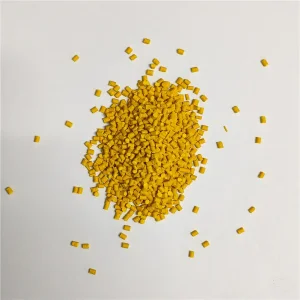
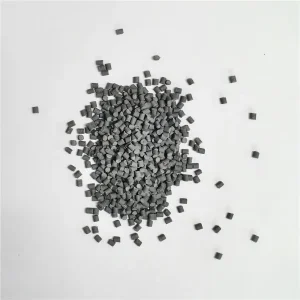
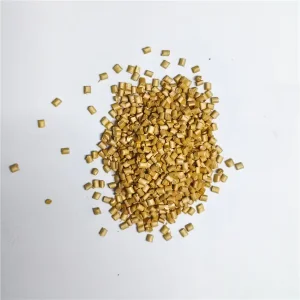
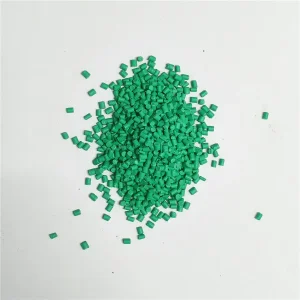
Explore our specialized range of color concentrates, metallic effects, and functional additives available for bulk export to North America.
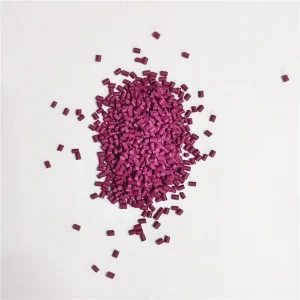
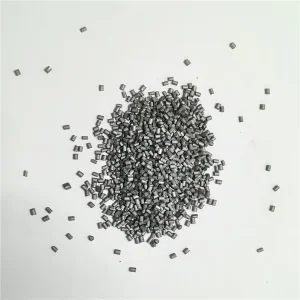
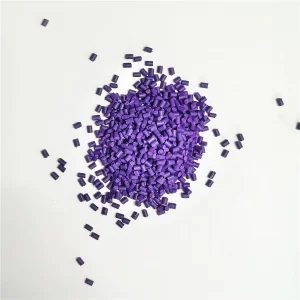
Clear, authoritative technical and trade answers addressing regulatory, quality, and shipping inquiries.
Our masterbatches designed for US food packaging are formulated exclusively using raw materials listed in the FDA 21 CFR 177.1520 guidelines and positive chemical inventories. We provide complete Heavy Metal Analysis reports (conforming to CONEG / Coalition of Northeastern Governors guidelines) and Certificate of Compliance documentation for every export shipment.
Standard factory production lead time is 7 to 10 working days. Ocean transit times are approximately 14 to 18 days to US West Coast ports (Long Beach / Los Angeles, Oakland) and 25 to 30 days to US East Coast ports (Savannah, Norfolk, New York). Air freight express services are available for urgent color matching samples (3 to 5 days door-to-door).
Every batch undergoes rigorous quality control in our ISO-certified lab using Datacolor Spectrophotometers. We enforce a strict color tolerance metric of Delta E < 0.5 under standard illuminants (D65, F02, A). Retained samples for every batch are archived for 24 months to ensure seamless repeatability for future production runs.
Yes. To eliminate melt incompatibility and dispersion flaws, we tailor the carrier resin of our masterbatches to match your exact base polymer matrix (LLDPE, LDPE, HDPE, PP, EVA, or PS). This ensures identical melt flow indices (MFI) and optimal physical property retention in the final finished product.
Our standard trial order MOQ is 1,000 kg (1 metric ton) per color standard. Packaging options include 25kg moisture-proof PE woven bags, multi-wall Kraft paper bags, or 1,000kg UV-stabilized Jumbo Super Sacks (FIBC) mounted on ISPM-15 compliant heat-treated export pallets.
Partner with a premier Chinese masterbatch manufacturer. Contact our export engineering team to request free product samples, technical datasheets, and direct factory pricing tailored for the United States market.
Send Inquiry Now