Engineered specifically to withstand Central Asia's harsh thermal variations and extreme UV radiation while reducing plastic processing overhead.
Uzbekistan is undergoing a historic industrial transformation. Under the macroeconomic modernization reforms spearheaded by the government, the republic has emerged as Central Asia’s premier industrial manufacturing and agricultural processing power. With major industrial free economic zones (FEZs) established in Tashkent, Navoiy, Samarkand, Angren, and the Fergana Valley (Namangan, Andijan, Fergana), domestic polymer processing capacity has expanded by over 14% annually over the last decade.
Historically reliant on imported finished plastic items, Uzbekistan has rapidly shifted toward localized compounding, extrusion, and injection molding. High-profile national infrastructure projects—ranging from modern urban residential complexes to large-scale agricultural drip irrigation networks—have driven exponential demand for raw polyolefins (HDPE, LDPE, LLDPE, PP) and high-performance additive masterbatches. However, local processing plants face distinct operational challenges that necessitate specialized masterbatch chemistry:
Rapid expansion across Navoiy and Angren FEZs requires steady supplies of standardized, ISO-certified raw additives and colorants for industrial production lines.
Massive adoption of drip irrigation and greenhouse film across Samarkand and Bukhara boosts demand for anti-clogging black masterbatch and high-opacity white masterbatch.
Direct freight corridors via Khorgos and Altynkol rail points ensure predictable 12-15 day transit times from Changzhou factory floors directly to Tashkent dry ports.
The global color masterbatch and polymer additive industry is undergoing a paradigm shift driven by sustainable compounding techniques, ultra-fine pigment micronization, and digital shade-matching automation. International buyers across Europe, the Middle East, and Asia are abandoning traditional liquid dyes and dry pigment powders in favor of modern pelletized masterbatches due to zero dust pollution, precise dosing, and uniform dispersion.
Key global technological shifts impacting local procurement decisions in Central Asia include:
| Technical Parameter | Legacy Industry Standard | Jiazhou Advanced Standard (2026+) | Impact on Uzbek Plastics Manufacturers |
|---|---|---|---|
| Pigment Dispersion Index | Manual mixing / Low shear twin-screw | Nanometer-scale triple-extrusion dispersion | Prevents streak marks, filter mesh clogging, and film blowing bubble breaks. |
| Thermal Stability Range | 180°C - 220°C | Up to 260°C - 300°C Continuous | Zero pigment discoloration during high-speed PP injection & HDPE pipe extrusion. |
| Carrier Resin Compatibility | Generic Recycled Carriers | 100% Virgin PE / PP / Universal Polymer Carriers | Eliminates structural embrittlement, maintaining high impact resistance. |
| Compliance & Eco-Safety | Basic Industrial Grade | RoHS, REACH, Heavy-Metal Free, ISO9001 | Allows Uzbek exporters to sell finished goods into EU & CIS markets seamlessly. |
While European masterbatch suppliers offer reputable quality, their premium pricing and long maritime-plus-overland transit logistics present severe working capital bottlenecks for Uzbek enterprises. On the other hand, sourcing from Changzhou Jiazhou Plastic Products Co., Ltd. combines World-Class Manufacturing (WCM) efficiency with direct, duty-optimized Silk Road rail corridor access.
Located in Jiangsu Province—China’s core chemical and polymer processing cluster—Jiazhou leverages direct supply lines with global resin giants (Sinopec, Sabic, ExxonMobil). By purchasing titanium dioxide (TiO₂), high-purity carbon black, and organo-pigments in kiloton volumes, we pass structural cost savings directly to our partners in Uzbekistan, lowering masterbatch unit costs by 20% to 35% compared to European equivalents.
Our 6,000 m² facility features modern high-torque co-rotating twin-screw extruders equipped with loss-in-weight gravimetric feeders. This ensures every masterbatch pellet contains exact pigment concentration tolerances (±0.2%), preventing batch-to-batch color shifts in large-scale plastic molding runs.
Through established rail corridors (China-Central Asia Railway via Khorgos / Horgos Gateway), shipments leave our factory in Changzhou and reach Tashkent dry ports (Sergeli / Chukursay) within 12 to 15 days. This rapid turnaround time significantly reduces safety stock requirements for factory managers in Uzbekistan.
Different regions and industrial segments in Uzbekistan exhibit highly distinct technical demands for masterbatch formulations:
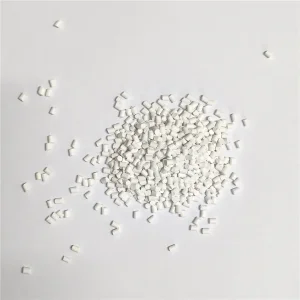
Extremely thin PE films (15 to 50 microns) require White Masterbatch with 40%-70% TiO₂ content paired with UV stabilizers. Our formulation guarantees optical opacity, light reflection to optimize plant photosynthesis, and resistance to pesticide degradation without causing film tears during high-speed blowing.
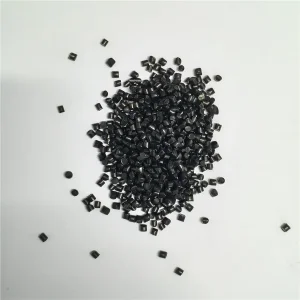
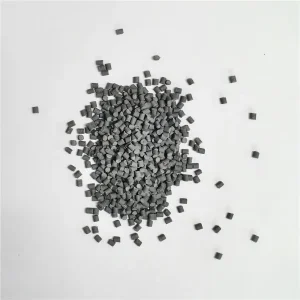
Municipal water transport networks require Black Masterbatch formulated with P-type and P-E-type carbon black particle size (<25 nm). This delivers total light-blocking capability, preventing micro-algal growth inside municipal pipelines and ensuring a service life exceeding 50 years.
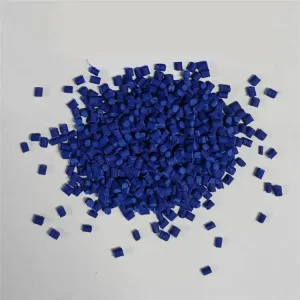
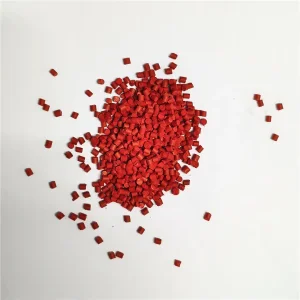
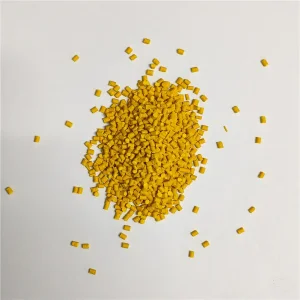
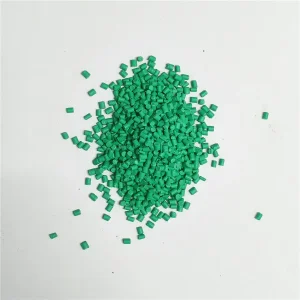
Polypropylene tape stretching lines operating at high draw ratios require Color Masterbatches (Blue, Red, Yellow, Green) with high heat resistance and non-migrating pigments to prevent spinneret clogging and fiber breakage during high-speed weaving.
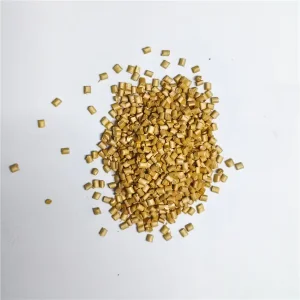
Heavy-duty injection molders producing consumer goods require Filler Masterbatch (CaCO₃) and Metallic/Gold/Silver Color Concentrates that increase structural rigidity, shorten cooling cycle times, and impart a luxurious surface finish without warping.
For procurement officers and quality managers in Uzbekistan, selecting the right masterbatch supplier requires evaluating precise physical and chemical metrics rather than relying solely on unit price per kilogram. Substandard masterbatch master-mixes frequently lead to costly extruder downtime, filter clogging, color fading, or brittle end-products.
Explore our full line of specialized masterbatches available for direct export and customs clearance to Uzbekistan.
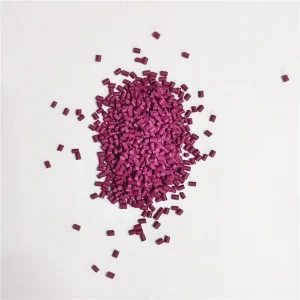
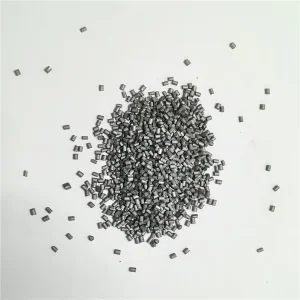
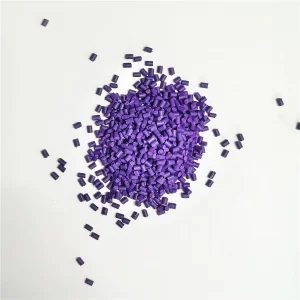
Clear, authoritative answers to common inquiries regarding customs clearance, technical formulation, logistics, and order fulfillment.
We ship via direct rail freight (CR Express) originating from Jiangsu/Zhejiang railway hubs, crossing through Khorgos (Horgos) or Altynkol border stations directly into Uzbekistan (Tashkent Chukursay / Sergeli freight stations). Typical transit time is 12 to 15 days from dispatch.
Yes! Our R&D laboratory is equipped with computerized color spectrophotometers. Clients in Uzbekistan can provide Pantone/RAL numbers or physical plastic samples. We formulate matching samples within 3 business days and dispatch sample packs for on-site extrusion testing.
Our masterbatches utilize thermal-stabilized carrier resins combined with high-grade organic and inorganic pigments that withstand processing temperatures between 260°C and 300°C without shade shift, degassing, or melt strength reduction.
Absolutely. All shipments are supplied with full documentation including Certificate of Analysis (COA), Material Safety Data Sheets (MSDS), ISO9001 certification, and RoHS/REACH compliance reports required for smooth Uzbekistan customs declaration.
Due to our high pigment concentration, standard addition rates are between 1% and 4% depending on wall thickness and opacity requirements. For film blowing, a 1.5% to 3% addition is typical; for injection molding, 1% to 2% is generally sufficient, optimizing production costs.
Our standard MOQ is 1,000 kg (1 MT). Masterbatches are packed in heavy-duty 25 kg moisture-proof PE/Kraft paper compound bags, unitized on wooden pallets with heat-shrink wrap to withstand transit across Central Asian rail networks.
Accelerate your plastic processing efficiency in Uzbekistan with high-concentration, ultra-dispersed PE/PP masterbatches engineered for maximum performance and cost efficiency.