Engineered for high-speed blown film, precision injection molding, and eco-compliant packaging.
Analyzing demand vectors, technical quality expectations, and supply chain shifts in the Greater Tokyo Area (Kanto Industrial Zone).
The Greater Tokyo Area, encompassing Kanagawa, Saitama, Chiba, and the surrounding Kanto industrial belt, represents one of the world's most advanced consumer and industrial plastic processing ecosystems. Unlike emerging manufacturing hubs focused primarily on commodity volume, products companies and manufacturers serving the Tokyo market operates under stringent quality benchmarks dictated by Japanese Industrial Standards (JIS), rigorous Environmental, Social, and Governance (ESG) regulations, and micro-precision zero-defect expectations.
In recent years, the global masterbatch market has experienced a fundamental transformation. Driven by volatile polymer resin costs, supply chain security demands, and shifting regulatory frameworks such as the Japanese Ministry of the Environment’s Resource Circulation Strategy for Plastics, plastic converters in Tokyo are increasingly seeking advanced masterbatch formulations that offer multi-functional benefits: ultra-high pigment dispersion, precise rheological matching, extreme heat resistance up to 260°C–300°C, and full compliance with food contact safety laws.
At the core of premium masterbatch manufacturing for Tokyo enterprises lies the science of micro-dispersion. Poor pigment dispersion leads to streaks, filter clogging, pinholes in blown thin-films, and compromised mechanical strength in thin-walled injection parts.
Customized PE carrier resin matrix matching the exact Melt Flow Index (MFI) of the host polymer (e.g., 2g/10min to 20g/10min) to guarantee effortless melting and zero phase separation.
Pigment particles are processed via high-shear twin-screw co-rotating extruders down to sub-micron size range (30nm–100nm), maximizing tinting strength and surface gloss.
Formulated with high thermal stability organic pigments capable of withstanding temperatures up to 260°C without color shift, fading, or chemical bleeding into food products.
| Masterbatch Type | Pigment Concentration (%) | Heat Resistance (°C) | Light Fastness (Blue Wool Scale) | Primary Tokyo Industry Application |
|---|---|---|---|---|
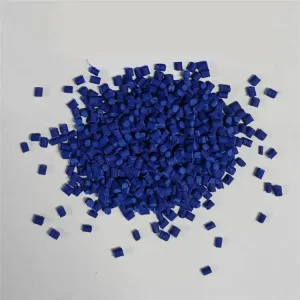
| High-Concentration Blue PE | 40% - 55% Phthalocyanine Blue | 260°C - 280°C | Class 7-8 | Medical Trays, Electronic Housings, Beverage Caps |
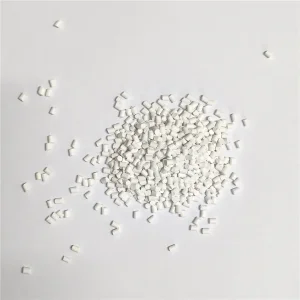
| Rutile Titanium White PE | 60% - 70% Rutile TiO2 | 280°C - 300°C | Class 8 | Multi-layer Milk Packaging, High-Opacity Films, Appliances |
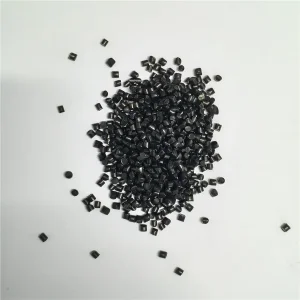
| Ultra-Deep Black PE | 30% - 45% Carbon Black | 260°C - 300°C | Class 8 | Automotive Engine Components, Geo-membranes, Pipe Extrusion |
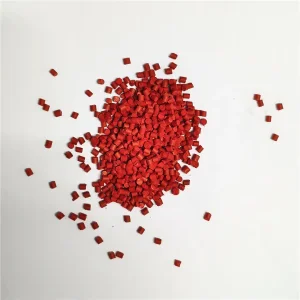
| Vibrant Red PE | 35% - 50% Organic Red | 240°C - 260°C | Class 6-7 | FMCG Containers, Toys (ST Standard), Decorative Injection |
Fulfilling unique engineering specifications for Japan’s leading industrial clusters.
Tokyo’s retail and convenience sector demands barrier packaging films under 20 microns with zero pinholes. Our White and Color PE masterbatches ensure 100% opacity, non-toxic food contact safety, and zero taste transfer in compliance with Japan Food Sanitation Act Standards.
Serving Kanagawa and Tokyo precision instrument factories. Masterbatch formulations feature anti-static surface properties, high dielectric strength, and precise pantone color matching for consumer electronics housings and internal component clips.
For municipal construction projects in Chiba and Saitama, our High-Concentration Black Masterbatch utilizes premium P-type carbon black to deliver high UV resistance, stress-crack resistance, and long-term durability for PE-RT and HDPE pipe systems.
Pioneering next-generation polymer additivities, bio-based carriers, and circular economy compatibility.
As Japan accelerates its transition toward a decarbonized economy, products companies serving Tokyo must evolve. The technological roadmap for color and additive masterbatch manufacturing centers on three disruptive vectors:
Traditional carbon black absorbs Near-Infrared (NIR) radiation used in Japanese recycling facilities, preventing automatic optical sorting of black plastic containers. Our next-generation NIR-detectable black masterbatch utilizes specialized inorganic pigment systems that allow full spectrum infrared reflectance, enabling automated sorting and high-purity mechanical recycling.
To reduce scope 3 carbon emissions for Tokyo brand owners, our R&D team has developed bio-degradable PLA carrier masterbatches and Post-Consumer Recycled (PCR) PE carrier matrices. These systems maintain high pigment loading efficiency while aligning seamlessly with eco-labeling benchmarks.
Unlocking competitive advantages through Chinese industrial cluster integration and rapid logistics to Tokyo Port.
Located in the Yangtze River Delta industrial core, Changzhou Jiazhou Plastic Products Co., Ltd. leverages 16 years of dedicated masterbatch manufacturing experience. Our 6,000 m² state-of-the-art facility integrates advanced twin-screw extruders, computerized spectrophotometers, and continuous melt-flow index monitoring.
For Tokyo buyers, sourcing directly from Changzhou provides an unbeatable combination of cost optimization, custom color matching speed (sample dispatch within 48 hours), and direct maritime transport from Shanghai/Ningbo to Tokyo or Yokohama within 4 to 6 ocean transit days.
Meeting stringent international and Japanese domestic regulatory mandates.
Compliance is non-negotiable when exporting plastic masterbatches into Japan. Products manufactured by Changzhou Jiazhou undergo comprehensive testing in accredited third-party laboratories (SGS, TUV) to guarantee strict adherence to global chemical standards:
100% Heavy-metal free, zero lead, cadmium, mercury, or hexavalent chromium.
Fully compliant with MHLW Notification No. 370 & Positive List System.
Certified quality management system covering raw materials to final packaging.
Chemical substance control compliance under Japan's CSCL regulations.
Expert answers to technical, commercial, and logistics questions from Japanese clients.
Our PE masterbatches undergo rigorous melt filtration tests (Pressure Filter Test) and use narrow-molecular-weight carrier resins matching host polymers. This eliminates screen pack clogging, prevents pressure spikes, and guarantees uniform dispersion even under ultra-high extrusion speeds exceeding 300 m/min.
Yes! We offer professional spectrophotometer-assisted custom color matching. Japanese clients can provide Pantone codes, RAL codes, or physical plastic samples. Our lab formulates a exact match and dispatches trial samples via DHL/FedEx within 48 to 72 hours.
We provide full FOB, CIF, or DDP shipping terms to Tokyo Port and Yokohama Port. Thanks to Changzhou's proximity to Shanghai port, sea transit takes only 4–6 days, ensuring a total door-to-door fulfillment timeline of approximately 15 to 18 days from order confirmation.
Absolutely. Our dedicated food-grade masterbatch series uses high-purity pigments certified under the Japan Food Sanitation Act Positive List and FDA standards, ensuring zero migration of hazardous substances or odor contamination in food and beverage containers.
Explore our complete product lineup serving manufacturers across Greater Tokyo and worldwide.
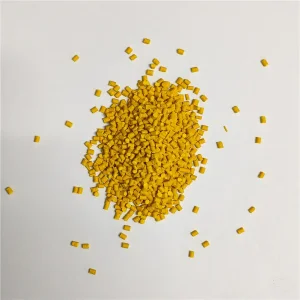
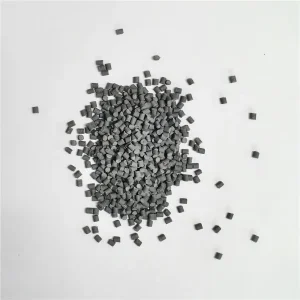
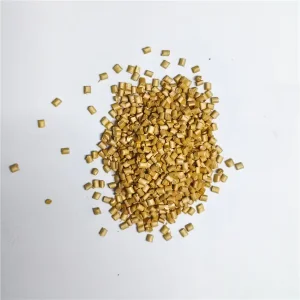
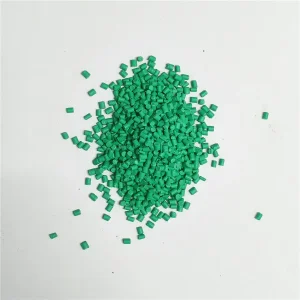
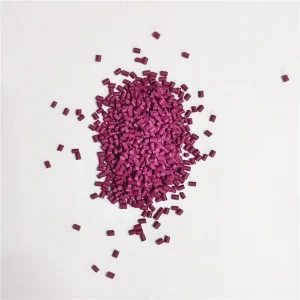
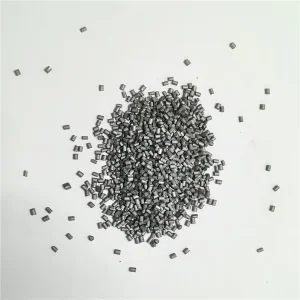
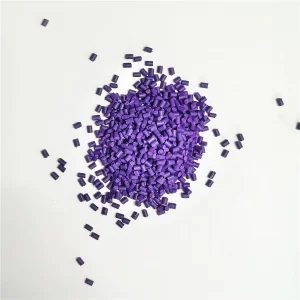
Connect directly with Changzhou Jiazhou's senior masterbatch engineering team. Request technical datasheets, free sample formulations, or custom Pantone color matching for your Tokyo plant today.
Send Inquiry Now