Engineered to withstand equatorial thermal processing conditions and satisfy high-output blown film and injection molding lines in Ho Chi Minh City industrial zones.
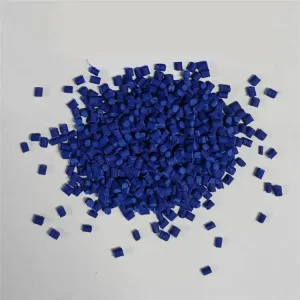
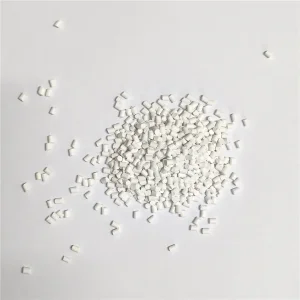
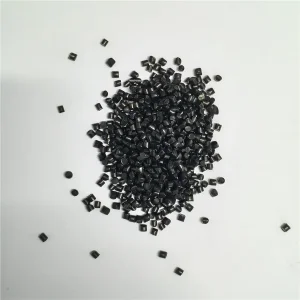
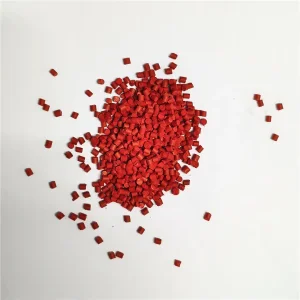
An in-depth evaluation of Southern Vietnam's economic engine, industrial cluster expansion, and the technical requirements driving polymer compound procurement.
Ho Chi Minh City (HCMC) serves as the primary focal point of Vietnam’s industrial manufacturing framework. Anchored by neighboring manufacturing corridors in Bình Dương, Đồng Nai, and Long An, the Metropolitan HCMC industrial ecosystem accounts for over 40% of Vietnam’s total plastic production capacity. Foreign Direct Investment (FDI) into Southern Vietnam has undergone a strategic shift from traditional low-tier assembly to advanced polymer processing, high-barrier flexible packaging, electronics enclosures, and automotive component manufacturing.
Industrial parks such as Tan Thuan Export Processing Zone, Saigon Hi-Tech Park (SHTP), Le Minh Xuan, and Cat Lai Industrial Zone host hundreds of multi-national plastic conversion facilities. This dense concentration of plastic processing plants requires an uninterrupted, high-specification supply of masterbatch compounds—specifically high-dispersion PE/PP color masterbatches, functional additive packages, and micro-calcium carbonate (CaCO3) filler masterbatches.
As global enterprises diversify their supply chains, Ho Chi Minh City has emerged as a preferred destination for OEM/ODM plastic manufacturing. However, local plastic converters face stringent export specifications set by international buyers in North America and the European Union. Products manufactured in HCMC must strictly adhere to international chemical standards, including REACH, RoHS, FDA food-contact compliances, and heavy-metal-free protocols.
To satisfy these global criteria, HCMC plastic manufacturers are moving away from raw pigment powders, which cause atmospheric contamination and batch color inconsistency, toward high-concentration masterbatches using premium carrier resins (LLDPE, LDPE, HDPE, and specialized copolymers).
The humid tropical environment of Ho Chi Minh City (averaging 75-85% relative humidity) poses unique storage and processing challenges for polyolefin compounds. Poorly encapsulated masterbatches absorb moisture, resulting in surface silver streaks, pinholes, and reduced tensile strength in blown film extrusions. Selecting masterbatches formulated with moisture-repellent carrier matrix technologies is vital for maintaining production efficiency in Southern Vietnam facilities.
Evaluating masterbatch performance beyond unit price: Material Science parameters, Melt Flow Index (MFI) matching, and Rheological compatibility.
| Performance Parameter | Testing Benchmark / Method | Technical Impact on Processing | HCMC Market Relevance |
|---|---|---|---|
| Carrier Resin Melt Flow Index (MFI) | ASTM D1238 / ISO 1133 (2.16kg at 190°C) | Ensures identical melt viscosity between masterbatch and virgin PE/PP resin. Prevents phase separation and streakiness. | Crucial for high-speed extruders in industrial zones like Binh Chanh and Tan Binh operating at peak capacity. |
| Pigment Dispersion Index | DIN EN 13900-5 (Filter Pressure Value - FPV) | Low FPV (<1.5 bar/g) guarantees micro-pigment particle dispersion down to <2 microns, avoiding screen pack clogging. | Extremely important for thin agricultural mulch films and ultra-thin flexible retail packaging produced in HCMC. |
| Thermal Stability Rating | TGA Thermal Gravimetric Analysis (260°C – 300°C) | Prevents organic pigment degradation, shade shifting, and volatile gas emission during high-temperature injection molding. | Essential for deep-draw electronics casing and structural plastic parts manufactured in Saigon Hi-Tech Park. |
| Lightfastness & Weatherability | Blue Wool Scale (1–8) / ISO 4892-2 Xenon Arc | Guarantees resistance to UV fading, photo-oxidation, and color degradation under prolonged outdoor exposure. | Mandatory for outdoor construction pipes, outdoor furniture, and shipping crates exposed to Vietnam’s high UV index. |
| Anti-Migration & Bleeding | ISO 183 vertical contact test under heat/pressure | Prevents color pigment from leaching into adjacent surfaces or contained liquids. | Critical for FDA-compliant food contact containers and flexible beverage packaging produced in Southern Vietnam. |
Utilizing high-concentration masterbatches (up to 70% pigment or mineral loading) allows converters to reduce operational let-down ratios (LDR) to 1%–2%. This significantly lowers freight costs to Cat Lai Port and decreases warehouse storage footprints in HCMC.
Modern masterbatch formulations replace toxic heavy-metal pigments (Lead, Cadmium, Hexavalent Chromium) with high-grade organic and inorganic alternatives, supporting seamless compliance for goods exported to North American and European destinations.
Advanced dual-screw compounding guarantees Delta E (ΔE) color variance below 0.5 compared to Pantone / RAL standards, eliminating batch-to-batch color shifting across multi-line production runs in high-volume HCMC factories.
Pioneering eco-friendly carrier matrices, nano-dispersion techniques, and circular economy integration for Vietnam’s evolving industrial landscape.
With Vietnam implementing tighter regulations under the Law on Environmental Protection 2020 and Extended Producer Responsibility (EPR) mandates, HCMC plastic manufacturers are actively increasing Post-Consumer Recycled (PCR) and Post-Industrial Recycled (PIR) plastic content.
Next-generation masterbatches utilize highly compatible rPE and rPP carrier resins chemically modified with interfacial coupling agents. This allows seamless incorporation of masterbatch pigments into recycled plastic feeds without compromising tensile strength or causing melt flow instability.
The trend in Ho Chi Minh City's plastics market is moving away from single-function colorants toward multi-functional combo masterbatches. Modern formulations combine vibrant color pigments with performance additives in a single pellet:
CaCO3 filler masterbatches remain a cost-effective choice for HCMC blown film and woven bag manufacturers. Advanced surface treatment with stearic acid and titanate coupling agents allows filler loading levels up to 40%–50% in polyolefin matrices while maintaining film opacity, dart-drop impact strength, and heat-seal integrity.
Traditional black masterbatches rely on Carbon Black pigments, which absorb Near-Infrared (NIR) radiation used by automated sorting equipment in recycling plants. New-generation NIR-detectable black masterbatches enable black plastic packaging to be sorted and recycled effectively, aligning with global sustainable packaging goals.
Dedicated export infrastructure, quick custom color matching, and full regulatory documentation for seamless import through HCMC maritime ports.
With direct maritime routes to Cat Lai Port, Tan Cang-Hiep Phuoc, and Cai Mep-Thi Vai deep-water terminals, container shipments reach Ho Chi Minh City within expedited timeframes (7–12 shipping days from major East Asian production centers). Efficient customs clearance protocols ensure steady inventory replenishment for your local production facility.
Our R&D laboratory offers Pantone, RAL, or physical sample color-matching services with a 48-hour sample development turnaround. Counter-samples are produced and dispatched directly to your HCMC technical team for lab testing, plaque molding, or blown film trial evaluation.
Every shipment arrives with a detailed Certificate of Analysis (CoA), TDS (Technical Data Sheet), and SDS (Safety Data Sheet). We provide comprehensive compliance documentation, including RoHS 3.0, REACH SVHC, FDA 21 CFR, and Halogen-Free verification, simplifying compliance audits for export-oriented manufacturers in Vietnam.
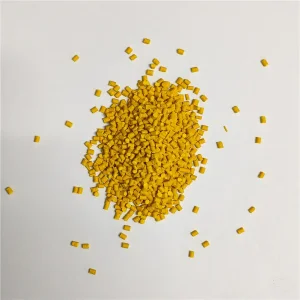
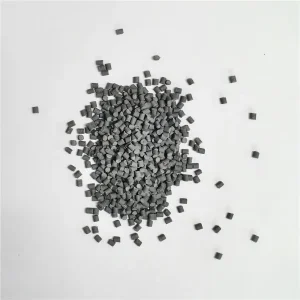
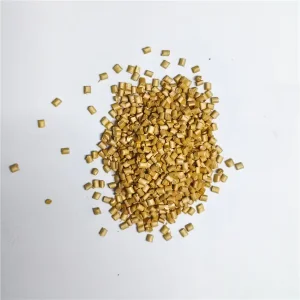
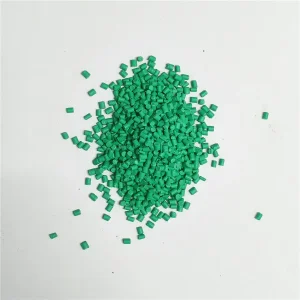
Explore our full range of color and functional masterbatches engineered for injection molding, blown film, sheet extrusion, and blow molding.
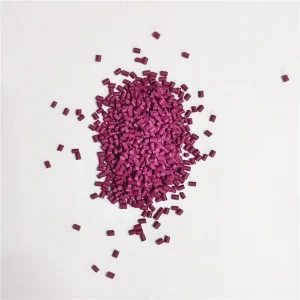
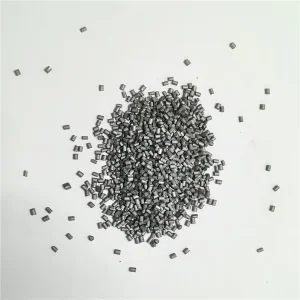
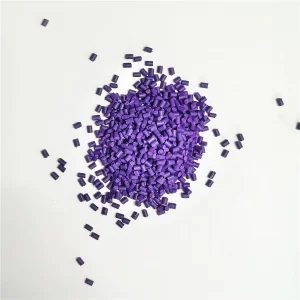
Expert answers addressing polymer processing, customs logistics to HCMC, and quality assurance for enterprise B2B buyers.
Selecting the ideal carrier resin requires matching the melt index (MFI) and polymer chemistry of your base virgin resin. For LLDPE and LDPE blown film processes in Ho Chi Minh City, we recommend an LLDPE carrier with an MFI of 10 to 20 g/10min to ensure uniform mixing and melt cohesion. Using an incompatible carrier (such as PP carrier in PE film) will result in delamination, reduced impact resistance, and surface cloudiness.
Our standard production cycle for containerized orders is 10 to 12 days. Sea freight transit from major East Asian manufacturing ports to Cat Lai or Cai Mep terminals takes approximately 3 to 7 days. Enterprise buyers in HCMC can expect end-to-end delivery within 15 to 20 business days after artwork and technical specification confirmation.
Calcium Carbonate (CaCO3) filler masterbatch substitutes a portion of expensive virgin polymer with micronized, surface-treated mineral filler (typically 1 to 2 micron particle size). At addition rates of 10% to 30%, it reduces overall raw material costs, increases thermal conductivity (speeding up cooling cycles in blow molding), and improves stiffness without causing brittleness or tear propagation in blown film applications.
Yes. All export-grade masterbatches intended for food-contact packaging or consumer electronics undergo third-party testing via SGS or Intertek. We provide REACH SVHC compliance letters, RoHS 3.0 heavy-metal-free test reports, and FDA 21 CFR 177.1520 statements with every order destined for global export from Southern Vietnam.
For standard stock colors (Black, White, Primary Blue, Red, Green), our MOQ is 500 kg. For custom Pantone/RAL color matching, the standard initial trial order MOQ is 1,000 kg. We also supply sample quantities (5 to 10 kg) for preliminary machine trial runs in your factory.
Connect directly with our masterbatch engineering specialists. Receive tailored technical datasheets, competitive FOB/CIF HCMC port pricing, and complimentary color matching samples within 48 hours.
Send Inquiry Now