The industrial landscape of Dortmund, situated at the economic heart of North Rhine-Westphalia (NRW) in Germany’s Ruhr Valley, has evolved from its historical steel and coal legacy into a premier hub for high-technology materials science, chemical engineering, and advanced polymer processing. Within this dense industrial ecosystem, plastic manufacturing facilities and masterbatch production units play a critical role in supplying high-performance polymer compounds across Western Europe and global export markets.
Masterbatch engineering—specifically the formulation of high-concentration polyethylene (PE) and polypropylene (PP) color concentrates, functional additives, and mineral fillers—serves as the backbone for modern plastic conversion processes. Whether for high-speed film blowing, thin-wall injection molding, or complex profile extrusion, plastic manufacturers require color solutions that deliver superior dispersion kinetics, strict batch-to-batch consistency, minimal melt flow index (MFI) disruption, and total regulatory compliance under stringent European standards.
Information Gain Key Takeaway: Modern polyolefin processing requires masterbatches engineered with optimized carrier-matrix compatibility. High pigment loading combined with narrow particle size distribution ensures optimal filterability (pressure value FPB < 0.8 bar/g) and prevents screw deposition during continuous high-output extrusion runs.
Engineered to Dortmund technical standards for film blowing, injection molding, and heavy-duty extrusion applications.
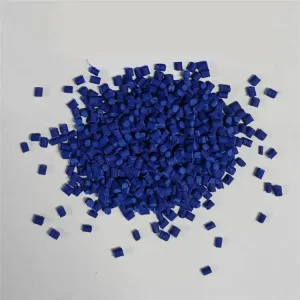
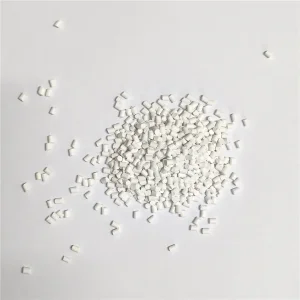
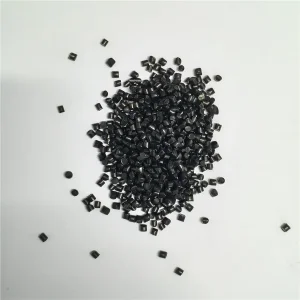
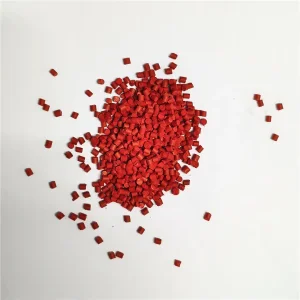
Dortmund serves as a vital logistics and manufacturing artery in Western Germany. Connected via the Dortmunder Hafen—the largest canal port in Europe—and integrated into the central European railway and Autobahn networks (A1, A2, A45), the city provides masterbatch manufacturers with an unprecedented operational advantage. Raw material inputs such as virgin polyolefins (LLDPE, LDPE, HDPE, PP), titanium dioxide pigments, channel and furnace carbon blacks, and specialty additives can be received, processed, and redistributed across North Rhine-Westphalia and international European markets with minimal lead times.
The regional demand for engineered polymer masterbatches in NRW is driven by three dominant industrial sectors:
Supply of thermal-stabilized, non-migratory color concentrates for interior trims, under-the-hood wire harnesses, and exterior bumper profiles engineered for Tier-1 suppliers.
High-opacity white and black masterbatches optimized for heavy-duty shipping sacks, multi-layer stretch hood films, and corrugated plastic containers utilized in local logistics hubs.
Carbon black masterbatches formulated with fine particle size (P-type pigments) providing long-term UV protection and hydrostatic strength for PE100 pressure pipe extrusion.
On a global scale, the masterbatch industry is undergoing a profound structural shift governed by sustainability mandates and regulatory frameworks. European plastic converters operating in and around Dortmund must adhere strictly to EU REACH Regulation (EC 1907/2006), heavy metal restriction directives (RoHS 3), and food-contact compliance guidelines established by EU Directive 10/2011 and FDA 21 CFR 177.1520.
Furthermore, the implementation of the European Union's Circular Economy Action Plan requires masterbatch factories to innovate beyond traditional coloration. This includes the development of:
Comprehensive physical and chemical parameters for quality verification and injection/extrusion compatibility.
| Masterbatch Grade | Active Loading Range | Carrier Resin Type | MFI (190°C / 2.16kg) | Heat Stability (°C) | Primary Industrial Application |
|---|---|---|---|---|---|
| PE Blue High-Concentration | 30% - 40% Organic Phthalo | LLDPE / LDPE | 12 - 25 g/10min | 280°C | Injection Molding, Blown Packaging Film |
| PE White High-Opacity | 60% - 70% Rutile TiO2 | PE / PP Universal | 8 - 18 g/10min | 300°C | Multi-layer Lamination Film, Milk Pouches |
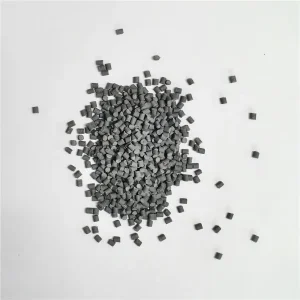
| PE Black High-Jetness | 40% - 50% Fine Carbon Black | HDPE / LLDPE | 5 - 15 g/10min | 260°C - 280°C | Geomembranes, Agriculture Pipe, Conduit |
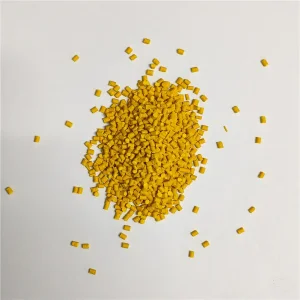
| PE Specialty Chromatics (Red/Yellow) | 35% - 45% High Chroma Pigments | LDPE / PE Carrier | 10 - 22 g/10min | 260°C | FMCG Packaging, Consumer Toys, Crates |
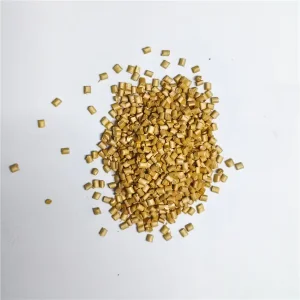
| PE Metallic Series (Gold/Silver) | 20% - 30% Metallic Flakes | HDPE / PP | 15 - 30 g/10min | 240°C - 260°C | Cosmetics Packaging, Decorative Extrusion |
Achieving optimal tinting strength, color opacity, and mechanical strength integrity in finished plastic parts relies heavily on the physical mechanisms of pigment dispersion during twin-screw extruding compounding. In a masterbatch manufacturing plant, raw pigment powders consist of primary particles, aggregates, and agglomerates. The primary objective of high-shear compounding is to break down agglomerates into primary sub-micron particles and coat them uniformly within a compatible carrier matrix.
For industrial converters in Dortmund producing thin blown films (down to 10–15 microns), poor pigment dispersion results in catastrophic processing defects such as specks, pinholes, bubble breaks, and uneven gauge distribution. High-quality masterbatches maintain a pressure filter value (Filter Pressure Value FPB) below 0.8 bar/gram of masterbatch when tested through a 14-micron mesh filter.
Targeted masterbatch formulations tailored to specific regional manufacturing industries.
High-heat stabilized masterbatch solutions engineered for Dortmund tier suppliers. Formulations withstand continuous under-hood temperatures up to 260°C without color fading or polymer degradation.
UV-stabilized, anti-fog white and color masterbatches utilized by Westphalian agricultural converters. Delivers exceptional outdoor weatherability for 24–36 month exposure cycles.
Fine-particle P-type Carbon Black masterbatch for municipal infrastructure in NRW. Ensures high hydrostatic strength, resistance to environmental stress cracking (ESCR), and UV shielding.
Food-contact certified, low-odor color concentrates for consumer packaging lines. Optimized for high melt strength and zero bloom during rapid cycle injection blow molding.
As polymer processing advances toward Industry 4.0 paradigms, masterbatch production facilities in Dortmund are integrating next-generation technologies to enhance material efficiency, trace-ability, and circularity:
Automated spectrophotometric batch adjustment systems compute real-time metamerism indices, reducing color matching iteration cycles from days to under 30 minutes.
Utilizing nano-scale functional additives to impart electrical conductivity, electromagnetic shielding (EMI), and barrier gas properties into thin-walled packaging polymers.
Incorporating microscopic fluorescent optical tracers into masterbatch formulations, enabling automated sorting equipment to identify polymer resin grade and food-contact status.
For industrial buyers operating across Germany, France, Benelux, and Eastern Europe, procuring masterbatches directly from experienced manufacturing partners ensures supply chain security. By implementing Just-In-Time (JIT) delivery frameworks and maintaining buffer stocks of standardized masterbatch carriers, masterbatch manufacturers mitigate volatile raw material price swings and guarantee continuous production uptime for high-volume conversion plants.
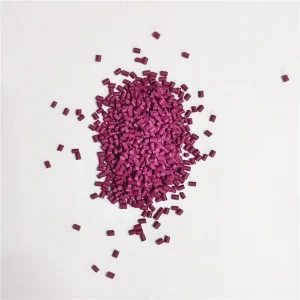
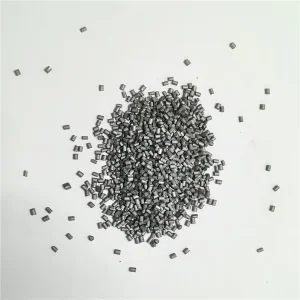
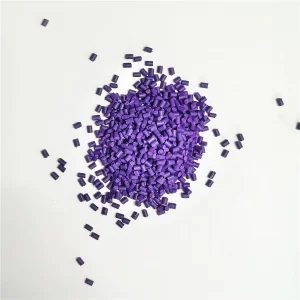
Explore our complete spectrum of engineered masterbatches designed for polyolefin film, injection, and profile processing.
Expert insights on masterbatch let-down ratios, carrier selection, and extrusion processing parameters.
The Let-Down Ratio (LDR) represents the dosage percentage of masterbatch blended into virgin resin. Typical LDR ranges from 1% to 4% depending on pigment concentration and required opacity. LDR is calculated as: LDR (%) = [Weight of Masterbatch / (Weight of Masterbatch + Weight of Resin)] x 100. For high-opacity white masterbatches (60% TiO2), a 2% LDR is often sufficient for thin film applications.
The carrier resin of the masterbatch must be rheologically compatible with the main matrix polymer. Using an LLDPE carrier masterbatch in Polypropylene (PP) or Polyethylene (PE) processing ensures complete thermal melting and uniform phase distribution without causing delamination, surface haze, or loss of mechanical tensile strength.
Film pinholes and undispersed specks stem from pigment agglomeration or moisture absorption. Masterbatches manufactured with low Filter Pressure Values (FPB < 0.8 bar/g) and pre-dried to moisture levels below 0.05% eliminate volatiles, preventing bubble instability and die buildup in high-speed extrusion lines.
Yes. Premium masterbatches intended for food packaging applications are formulated using heavy-metal-free organic pigments and FDA/EU certified carrier resins in strict compliance with EU Directive 10/2011 and REACH SVHC restrictions.
Rutile TiO2 possesses a higher refractive index (2.73) compared to Anatase (2.55), offering superior opacity, tinting strength, and UV weatherability. Rutile grade white masterbatch is essential for outdoor plastics and high-opacity packaging films.
High pigment loading can reduce the MFI of the final polymer mix. Masterbatch carriers are specifically formulated with controlled MFI (typically 10–25 g/10min) to balance melt viscosity during compounding, preventing pressure spikes in the extruder barrel.
Contact our technical sales team for custom masterbatch formulations, technical data sheets (TDS), safety data sheets (SDS), and complimentary factory samples.