Engineered to meet the exact thermal, dispersion, and regulatory demands of Central European plastics processing, blown film extrusion, and technical injection molding.
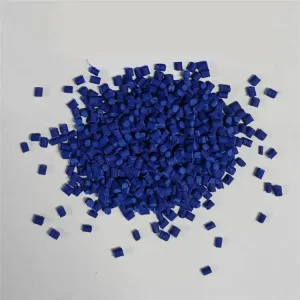
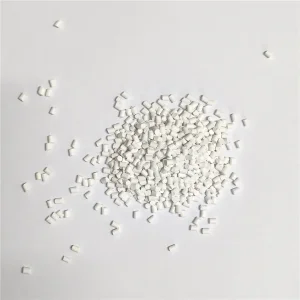
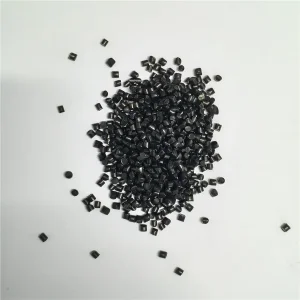
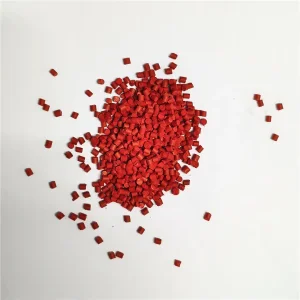
Austria represents one of the most sophisticated industrial landscapes in the European Union. Defined by precision engineering, strict environmental stewardship, and advanced polymer processing technologies, the Austrian industrial sector demands an uncompromising standard for raw materials, additives, and color masterbatches. Central to this eco-system are major manufacturing hubs located across Upper Austria (Oberösterreich)—the heartland of Austrian plastics processing around Linz and Wels—as well as industrial clusters in Styria (Steiermark), Lower Austria (Niederösterreich), and Vorarlberg.
When evaluating Products Suppliers & Supplier options in Austria, enterprise procurement directors and materials engineers face a dual imperative: achieving absolute color precision and mechanical consistency while remaining fully compliant with aggressive European ESG mandates and the Austrian Federal Ministry for Climate Action, Environment, Energy, Mobility, Innovation and Technology (BMK) guidelines.
Styria's ACStyria clean mobility network and Upper Austria's automotive supply chains require high-heat, weather-resistant masterbatch solutions capable of enduring intensive thermal aging and UV stress testing.
With Austria implementing strict recycled-content quotas under the EU Circular Economy Action Plan, converters demand colorants that seamlessly integrate into Post-Consumer Recyclate (PCR) polyolefin matrixes.
Medical device components and food-contact flexible films produced in Austrian facilities mandate heavy-metal-free, non-migratory colorants certified under ISO 10993 and EU Regulation 10/2011.
Global procurement teams supplying production lines in Austria face soaring energy costs and fluctuating polymer resin prices. Traditional raw pigment powder blending introduces high scrap rates, equipment contamination, and worker safety risks. By utilizing high-concentration Polyethylene (PE) and Polypropylene (PP) carrier masterbatches, processors achieve precise dosing (typically 1% to 3%), drastically reducing raw material waste and machinery downtime.
For premium European consumer brands, color deviations between production runs can result in entire batch rejections. Our advanced masterbatch manufacturing utilizes computer-controlled twin-screw compounding lines and spectrophotometric analysis to maintain ∆E color variances strictly below 0.3. This level of dispersion guarantees that blown films, extruded pipes, and blow-molded containers match global color specifications flawlessly.
Our products deliver full compliance documentation to streamline customs clearing and internal audit procedures for Austrian manufacturing firms.
Fully documented under EU Regulation (EC) No 1907/2006. Guaranteed zero inclusion of Substances of Very High Concern (SVHC) above threshold limits, protecting downstream brand equity.
Strict adherence to Directive 2011/65/EU and amendment (EU) 2015/863. Free from heavy metals including Lead, Cadmium, Mercury, and Hexavalent Chromium for electronics housing applications.
Formulations formulated for food packaging comply with EU Regulation No 10/2011 and US FDA 21 CFR standards, verifying overall and specific migration limits (OML/SML).
Development of masterbatch systems utilizing bio-polyethylene (Bio-PE) and Polylactic Acid (PLA) carrier matrices designed specifically for Austria's expanding eco-packaging sector, facilitating complete end-of-life industrial composting and closed-loop mechanical recycling.
Implementing high-shear twin-screw compounding with specialized surface coupling agents to achieve pigment loadings up to 70% while suppressing melt fracture and die build-up in high-speed micro-film blowing equipment.
Transitioning from traditional carbon black to Near-Infrared (NIR) reflective black masterbatch formulations. This allows automated optical sorting sensors in European recycling centers to detect and separate black plastic resins efficiently.
Explore our full line of non-migratory, heat-stable, and anti-fading masterbatches tailored for Austrian suppliers, trade partners, and industrial end-users.
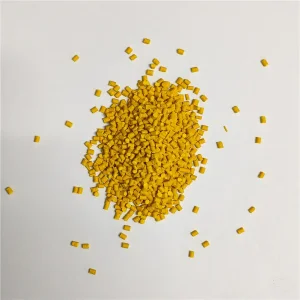
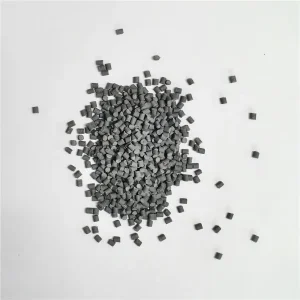
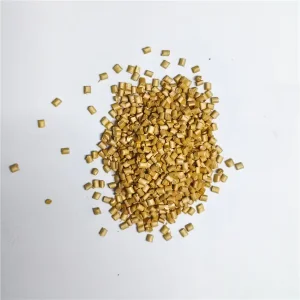
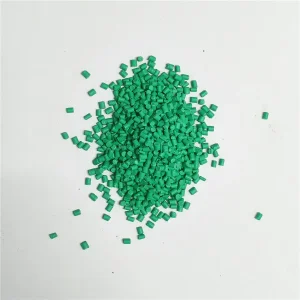
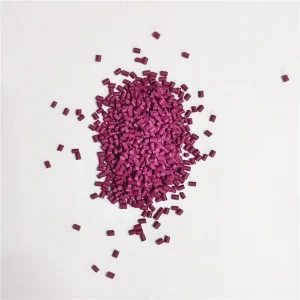
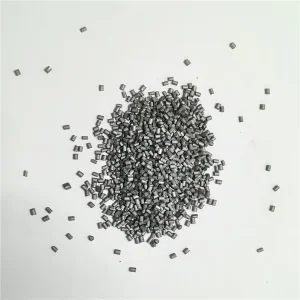
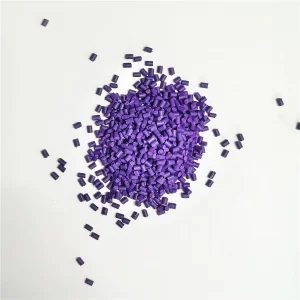
Standard stock formulations ship within 3–5 business days. Custom matched color masterbatches require 7–10 days for laboratory shade formulation, spectrophotometric matching, and sample batch testing, with expedited air/freight logistics options directly to major Austrian logistics hubs (Vienna, Linz, Graz).
Our heat-resistant black, red, and specialty color masterbatches use high-thermal-stability organic and inorganic pigments coupled with thermal stabilizers. This prevents thermal degradation, gas off-gassing, and color fading during high-temperature injection molding or extrusion.
Yes. Every masterbatch formulation is accompanied by comprehensive documentation including ISO certificates, REACH SVHC compliance declarations, RoHS lab test reports, Food Contact Compliance statements, TDS, and SDS in accordance with EU CLP regulations.
Absolutely. Our color engineers perform precise custom matching using spectrophotometry against RAL, Pantone, or physical target resin samples supplied by Austrian customers, maintaining tight tolerances (∆E < 0.3).